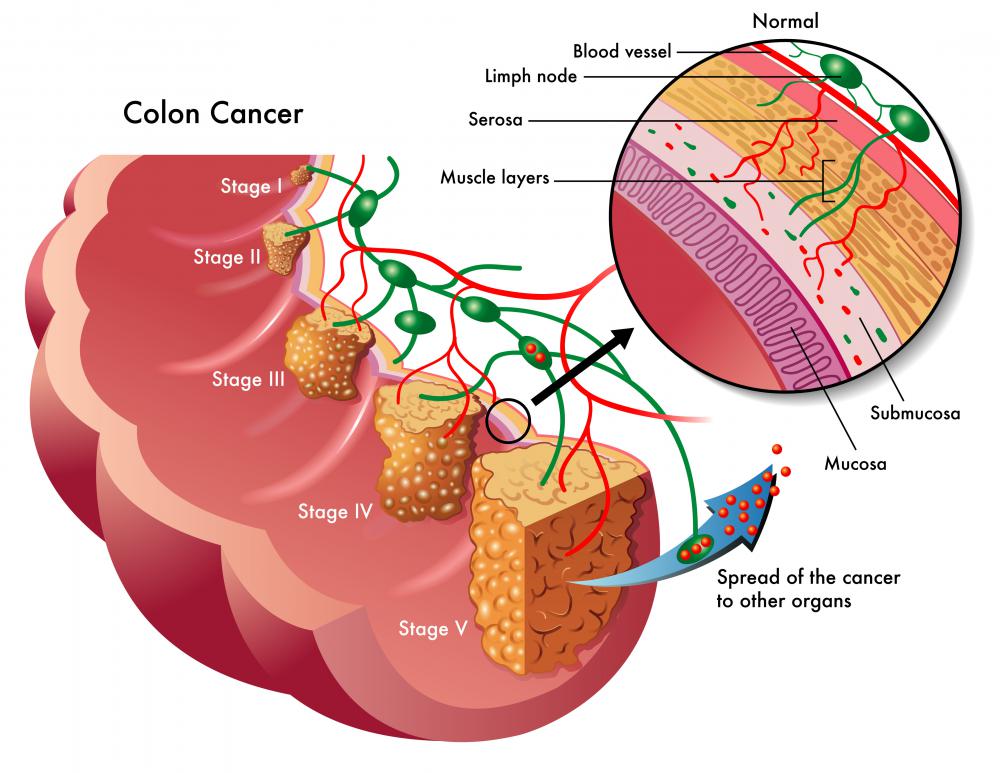
A colon neoplasm is a tumor, or abnormal growth, occurring in a part of the large bowel known as the colon. Neoplasia does not always mean cancer, because the term means new growth. The neoplastic cells that make up the growth can be benign or malignant, which is the same as saying they can be cancerous or non-cancerous. A benign tumor can sometimes change to become malignant, and the most common colon cancer, adenocarcinoma, develops from benign tumors known as polyps. The colon, together with the lowest section of the gut known as the rectum, is the part of the intestine in which tumors are most likely to develop. A colorectal tumor is often found to be a benign lump called a polyp. This kind of neoplasm exists in a number of different forms, with the adenomatous polyp being the most common. A polyp is a fleshy protuberance that grows from the gut lining. It may not cause any symptoms, but sometimes bleeding from the rectum can occur. Occasionally this may cause the patient to develop anemia. The neoplasm might also be associated with symptoms of constipation or diarrhea and, if the gut is narrowed by the tumor, the stools may appear thinner than usual. Malignancy can cause similar problems and, if colon cancer progresses to an advanced stage, additional symptoms of decreased appetite, weight loss, pain and intestinal blockage may occur.
View this journal page: http://www.sciaeon.org/gut-and-gastroenterology/home
Article page: http://www.sciaeon.org/gut-and-gastroenterology/articles-in-press
Share your manuscript: http://www.sciaeon.org/submit-paper
For queries: gastroenterology@sciaeonopenaccess.com

 Gut and Gastroenterology